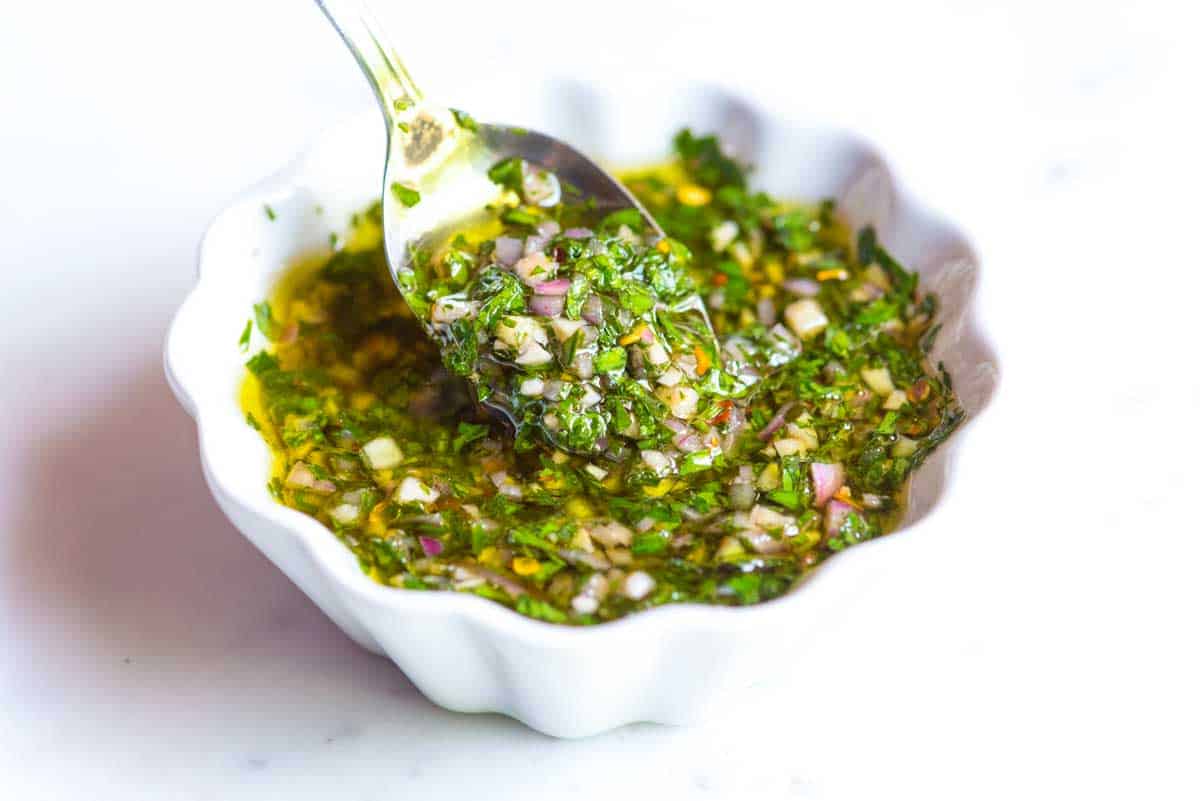

Chimichurri (Spanish: [tʃimiˈtʃuri]) is an uncooked sauce used both as an ingredient in cooking and as a table condiment for grilled meat. And yes, this is Argentina’s Favorite Sauce.
Food historians think that chimichurri was invented by gauchos to flavor meat cooked over open fires. If so, the gauchos probably used dried herbs as fresh herbs would spoil.
Argentine in its origins, chimichurri is typically made of finely-chopped parsley, minced garlic, oregano and white vinegar – though there are regional variations, with Uruguay adding red pepper flakes for an added kick. The name’s origin is unclear. Numerous linguists hold the name, chimichurri, as derived from Basque’s tximitxurri, pronounced chee-mee-CHOO-ree; stumbling interpreted as ‘a mix of several things in no special order’.
Another story claims that the name comes from ‘Jimmy’s curry’, Jimmy, being an Englishman who joined the fight for Argentine Independence. His name, being difficult for Argentines to pronounce, morphed into chimichurri.
Miguel Brasco, an Argentine food critic, believes the word was coined when the British failed in their invasion of Rio de la Plata in 1806 and were taken prisoner. The detainees requested condiments for their food and mixed English with Spanish.
Perbacco chef, Staffan Terje believes that chimichurri is identical to Sicily’s salmoriglio sauce, which is served mainly on seafood.
So what is Chimichurri? A zesty, green sauce made with fresh herbs, garlic, vinegar, chili pepper and olive oil that livens up pretty much anything you throw at it.
Let’s be honest, jalapeño Chimichurri is perfect as a topping for a grilled steak or a relish for lamb or chicken. Or served with tortilla chips.
When your garden is overflowing with peppers and summer herbs, whip up a batch of jalapeño chimichurri then store it in your fridge or freezer to keep those summer flavors alive all year round!
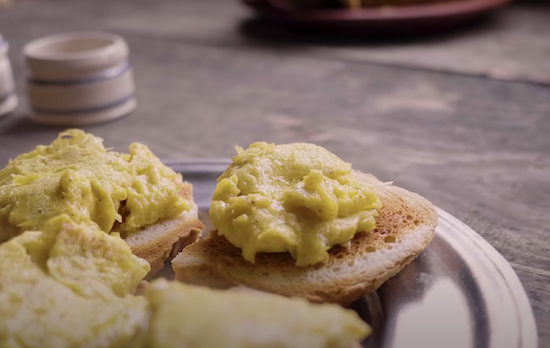
It’s as versatile as your favorite white t-shirt. You can use it 100 different ways. Steak, shrimp, fish, vegetables and chicken all love it — especially if they’re grilled or roasted. It even passes tossed with pasta or spooned over fresh tomato slices. Stirring it into scrambled eggs is a good idea, too.
But I promised you a recipe. Here’s we go.
Remember – you can make the sauce by hand or with the help of a bender or food processor. By hand works perfectly fine, it just means the sauce will have a bit more texture. The food processor makes quick work of things so choose whichever method you like best.
MAKES 1 CUP
YOU’LL NEED
1/4 cup vinegar or lemon juice
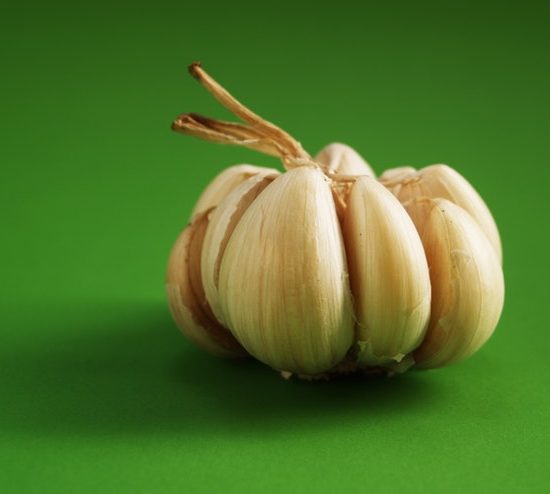
3 cloves garlic
1 jalapeño, halved and seeded
1/2 cup fresh parsley or cilantro leaves
2 Tbsp. fresh oregano
Pinch of chili flakes
Pinch of salt
1/4 cup extra virgin olive oil
Ice cubes
HOW TO MAKE IT
- Place vinegar or lemon juice, garlic, jalapeño, resh parsley and or cilantro leaves, fresh oregano, and a chili flakes, and a large pinch of salt in a blender.
- Pulse a few times to start then blend on medium speed. Slowly add extra virgin olive oil and 2 to 3 ice cubes. Puree until smooth.
- Scrape down the sides if necessary. Season with additional salt and chili flakes to taste. Serve over grilled fish, chicken, steak, pork, or veggies!
- Transfer any leftovers to a glass or plastic container with a tight-fitting lid. Store up to 2 weeks in the refrigerator.
Chef’s tip: Divide the jalapeño chimichurri into ice cube trays and freeze and use 1 to 2 cubes as desired per recipe.
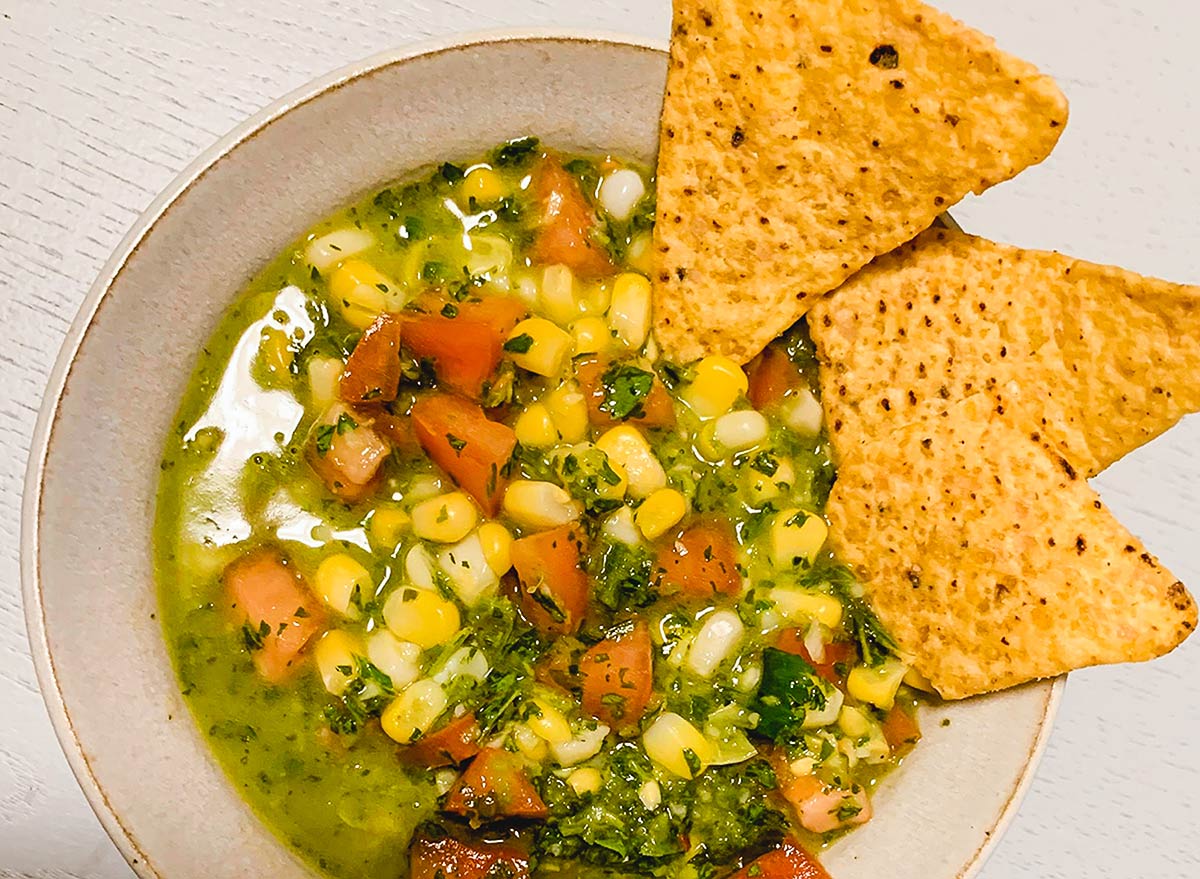
Turn your jalapeño chimichurri into a fresh corn & tomato salsa and stir in 1 large diced tomato and 1 cup fresh charred corn kernels! Serve with tortilla chips.
Until next time, enjoy this perfect Summer Jalapeño Chimichurri.
Article’s Source